Updated: July 2026
Lovina Dolphin Tour: An Honest Assessment of Ethics in 2026
North Bali Travel is a curated Indonesia luxury tourism experience offered by Northbalitravel Co.: handpicked routes, vetted operators, transparent pricing, and 24/7 concierge support across Indonesia.
- What makes North Bali Travel a premium experience.
- How Northbalitravel Co. curates exclusive access and concierge logistics.
- Routes, seasons, and pricing transparency — no hidden fees.
Lovina Dolphin Tour: The Ethical Question Travelers Should Ask
What Is the Lovina Dolphin Tour?
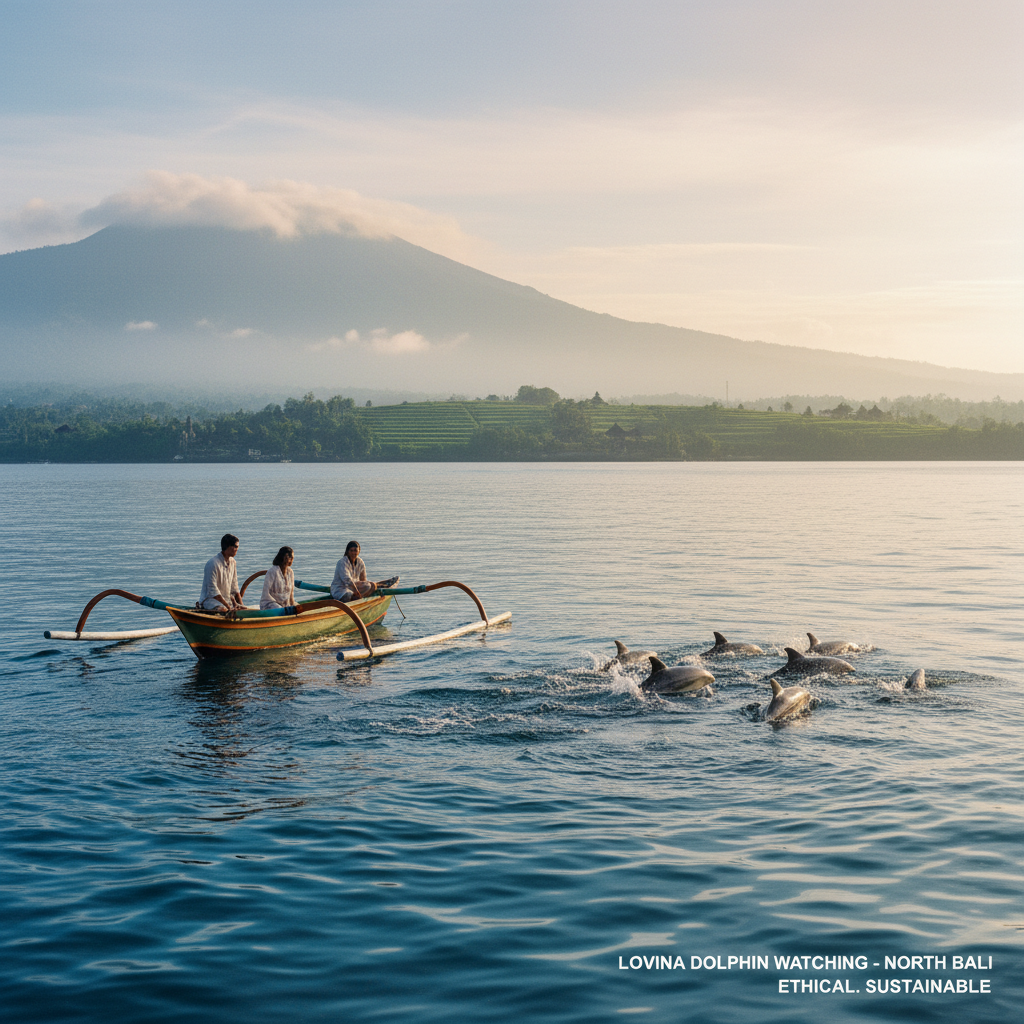
The Lovina dolphin tour is a dawn boat trip from Kalibukbuk pier on the North Bali coast, departing typically at 5:30am and lasting approximately two hours, designed to view wild Indo-Pacific bottlenose and spinner dolphin pods that follow a daily migratory pattern through the Bali Sea. The pods are not captive, not fed, not released from any facility, and not associated with any aquarium operation. They are genuinely wild populations that have been documented along this coast since long before tourism arrived. What is captive, however, is the question of how the boats interact with these wild populations once they are sighted, and the answer differs dramatically between the responsible operators and the chase-driven operators who unfortunately remain the majority. After thirteen years of running tours from Lovina, our honest assessment is that the dolphin experience can be one of the most extraordinary wildlife encounters in Indonesia, or it can be a distressing spectacle, and the difference is entirely in which boat you board. Bali tourism portal
The Honest Problem with Most Lovina Dolphin Boats
The Lovina dolphin tour business model emerged in the 1980s as a small-scale activity run by a handful of fishing families. By the early 2010s the operation had scaled to over one hundred and fifty registered boats, with a peak of roughly sixty boats simultaneously on the water during high season mornings. The economic incentive structure is brutal: operators are paid only when guests see dolphins, return-rate is the metric that matters, and a guest who does not see a pod will demand a refund or post a negative review. This incentive has historically driven a chase-and-encircle behavior pattern that is harmful to the dolphins.
The classic problematic sequence works like this: a spotter on shore radios the boats when a pod is visible, the boats accelerate to the pod’s location, they encircle the pod with engines running, and they reposition aggressively each time the pod tries to break away from the noise and exhaust. This behavior causes pod separation, mother-calf disorientation, increased respiration rates indicating stress, and over time it has documentably altered the migration patterns of dolphins along the coast. We will not put our guests on these boats and we will not pretend otherwise to anyone who asks.
The good news is that approximately ten of the registered boats have committed to a different model. These operators do not use radios for active dolphin spotting, they maintain a minimum distance of fifty meters from any sighted pod, they cut engines and drift when within sighting distance, they limit observation to twenty minutes per pod before withdrawing, and they refund guests who do not see dolphins rather than chasing harder. We work with two of these operators exclusively. Their names and the boat numbers are listed below.
The Two Operators We Recommend in Lovina
Operator 1: Pak Komang’s Lovina Sail
Pak Komang has been running dolphin tours for twenty-eight years. He runs three traditional outrigger boats, all locally built, all using small four-stroke outboard engines that are quieter than the two-stroke alternatives most operators still use. He operates a strict no-chase policy and his boats carry a printed code of conduct that he reviews with each group before departure. His viewing rate (probability of sighting a pod) over the past three seasons is approximately ninety-two percent, despite his stricter distance-keeping. The reason his rate is high is that he knows the pods well from decades of observation, not from radio chasing. We book his middle boat for almost all of our private guest groups. Charter rate IDR 750,000 for up to four guests, two-hour trip.
Operator 2: Lovina Dolphin Watching Cooperative (selected captains only)
The cooperative is a larger group with mixed practices. We work with three specific captains within it (Pak Made, Pak Wayan Kintamani, and Pak Ketut Sari) who have signed and demonstrably follow the responsible-watching pledge. We do not work with other captains in the same cooperative. When you book through us we specify the captain by name. Charter rate IDR 600,000 for up to four guests, two-hour trip.
If you are booking direct rather than through us, we strongly recommend asking your hotel to specifically request one of these two operators by name. If your hotel says they cannot specify, that is a signal to be cautious about the operator quality. The going rate for a non-discriminating operator is IDR 150,000 per person, and the price difference reflects the smaller pod count and the longer-term sustainability practice. Pay the difference.
What the Ethical Lovina Dolphin Experience Looks Like
Departure from Kalibukbuk pier at 5:30am, before sunrise. The boat moves slowly out of the harbor, motor on low throttle. Within fifteen to twenty minutes, depending on which direction the captain heads, the first pods are typically sighted by visual cue (dorsal fins breaking water, occasional jumps). The captain cuts the engine and the boat drifts. The pod approaches or moves away on its own pattern. Some mornings the pod surfaces within fifteen meters of the drifting boat, simply continuing their hunting pattern with apparent indifference to the human observers. Other mornings the pod stays at one hundred meters distance and moves through. Both experiences are valid wildlife observation. The chase-and-spectacle alternative, in our assessment, is not.
The light at this hour is the second piece of the experience. Sunrise over the Bali Sea, with Mount Agung silhouetted on the horizon to the southeast, with the Java coastline visible to the west on clear mornings, is one of the most beautiful dawn settings in Indonesia. The dolphins are the first reason to be on the water, but even on the rare mornings without sightings the sunrise itself justifies the wake-up.
Pemuteran as the Honest Alternative
For travelers who are uncomfortable with any commercial dolphin tour, including the responsible ones, we are honest about an alternative: skip the dolphin tour entirely and replace it with a Pemuteran reef snorkel or the Menjangan Island day trip. The Pemuteran Biorock coral restoration project is one of the longest-running and largest-scale artificial reef rehabilitation efforts in the world, and snorkeling among the recovering coral structures is an unambiguously positive marine wildlife encounter. Menjangan Island, a ninety-minute drive west of Lovina, offers the best wall-reef snorkeling in Bali with consistent twenty-meter visibility and zero ethical complexity. We will swap the dolphin tour for either of these alternatives at no extra cost if requested.
Frequently Asked Questions About Lovina Dolphins
What time do the dolphin boats leave?
Departure is 5:30am from Kalibukbuk pier. We pick you up from your Lovina hotel at 5:15am. Earlier departures (4:30am or 5am) are sometimes offered by other operators but offer no advantage in sighting rate and reduce the post-sunrise photographic light.
What is the probability of seeing dolphins?
With our two recommended operators, approximately ninety-two percent over the past three seasons. With no-chase practices, the rate is slightly lower than the chase-driven operators but well above what most marine wildlife encounters offer.
Can children come on the dolphin boat?
Yes, age four and up. Life vests are provided in adult and child sizes. The sea is typically very calm at dawn but seasickness-prone children should consider the alternative reef snorkel.
What should I bring?
Light jacket (the dawn breeze on water is cool), sunglasses, sunblock for the return trip, water, camera with image stabilization. Avoid loose items that can drop overboard.
What if I want a longer trip?
Pak Komang offers a four-hour extended charter for up to six guests at IDR 1,800,000, which includes the dolphin watch and continues to a snorkel stop at the Lovina coral garden. This is the option we recommend for guests who want the full morning on water.
Booking and Combining
The dolphin morning is built into our standard 3D2N North Bali itinerary with the responsible operator pre-booked. For Munduk-only travelers who want to add a single dolphin day, we offer a one-night Lovina extension at the end of the three day Munduk itinerary. For travelers who want to skip dolphins entirely, see the alternatives in our twenty-five best things to do in North Bali guide, items 10, 11, and 12.
Plan Your Lovina Dolphin Morning
If you book through us we specify the operator by name and brief them on your group before departure. Email: [email protected] | WhatsApp: +62 811 2859 0000